
Are beach safety flags the wrong colour?
As someone who regularly drives between Melbourne and the west coast of Victoria, the new West Gate Tunnel has been a welcome addition to the road network, saving me about 15 minutes each trip. The new routes and signage have taken some getting used to though, and I’m not the only one who has taken some time to adjust.
Drivers approaching the city from Geelong heading into the inner-west need to be in the correct lanes some 6 km before their exit. Miss the road signs and you will find yourself in an express lane heading over the Westgate Bridge, resulting in a lengthy detour.
Some travellers have expressed their frustration at what they see as confusing signposting along the route. I ended up taking a couple of wrong turns myself early on as I adjusted to the names of the new exits – and before my GPS updated its maps.
Confusing, new or inconsistent signage can be annoying when trying to find your way around in a car, but in other contexts it can have more serious consequences. Academics Samuel Cornell and Masaki Shibata have been studying the effectiveness of the surf lifesaving flags at Australian beaches. As reported in The Conversation, the message is not always clear, particularly for international tourists.
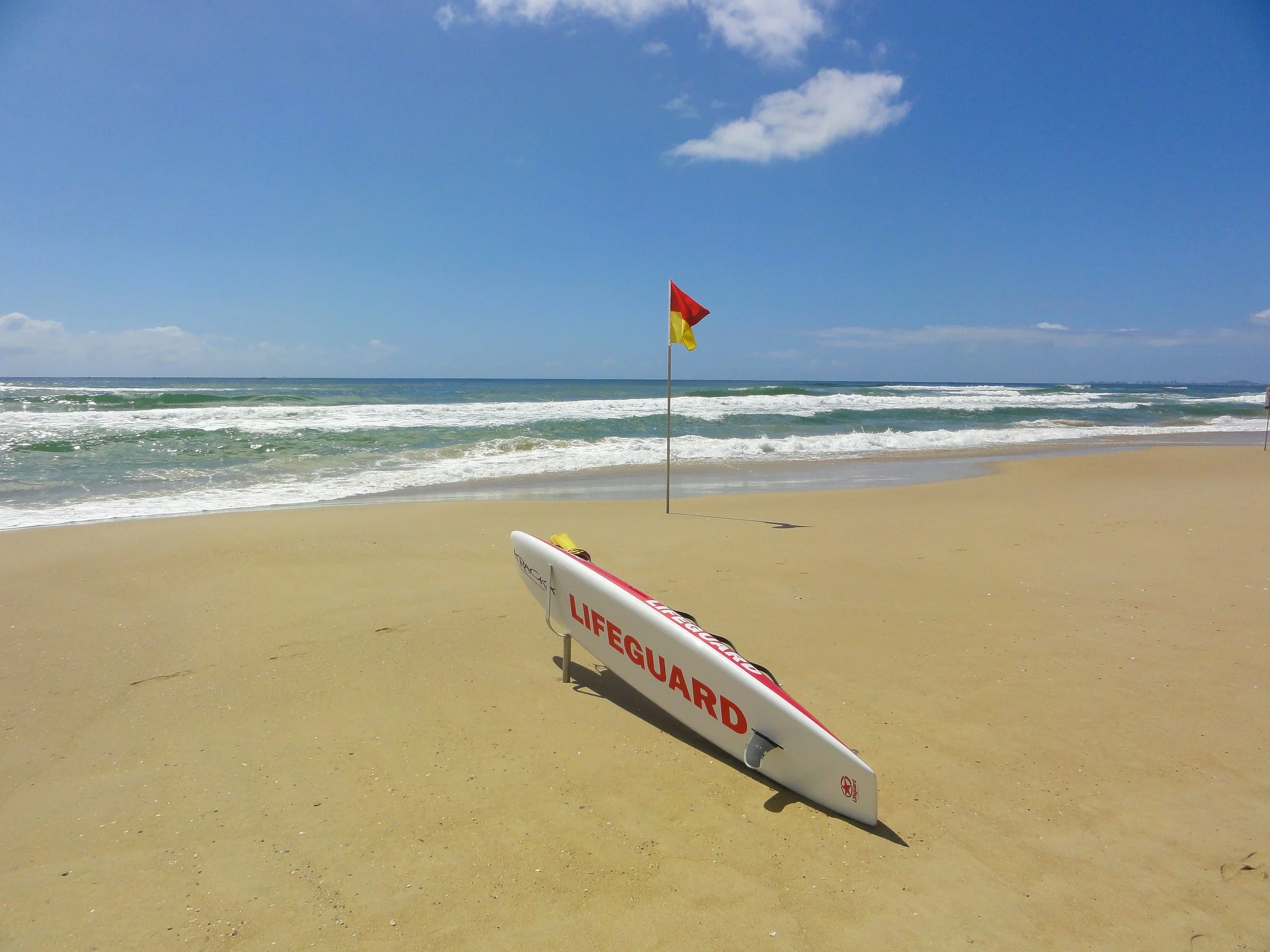
Most Australians would be familiar with the red and yellow flags that mark the area of water under active patrol by surf lifesavers, and where beachgoers are encouraged to swim. But in many countries (including Australia), the colour red commonly denotes danger and yellow the need for caution.
One recent study suggested that up to 70% of South Korean university students interpreted the red and yellow flags as indicating a dangerous area, while another study conducted in the Netherlands reported that about 40% of respondents thought they denoted danger.
In their article, the authors provide various options for improving beach safety, such as including a pictogram of a lifesaver on the flags or modifying the supporting messaging. (They note that different wording such as ‘stay between the flags’ is more reliably translated into some languages than the current ‘swim between the flags’.) Ultimately, they conclude that a change of colour – green instead of red and yellow – is at least worth testing.
With the number of drowning deaths in Australia surging to record levels last year, it does seem like it might be time to try something new. But any change risks unintended consequences, particularly when it involves a warning system with broad and longstanding recognition in Australia and many other parts of the world.
While beach flag systems do vary between nations, the red and yellow flags are the closest thing to a global standard – recognised by the International Life Saving Federation (ILS). The authors also acknowledge that the ILS explicitly discourages the association of green flags with ‘safe’ conditions because ‘no beach or even patrolled area can ever be completely risk-free’.
A better option might be improved communication around the meaning of the red and yellow flags for international visitors (for example, in-flight arrival videos or signs in multiple languages at patrolled beaches) to retain a symbol that currently enjoys a high level of local recognition while also building greater awareness and improving safety for all beachgoers, particularly those from other parts of the world.